Battery Recycling is the Key to Reduce E-Waste
18 Jun
2020
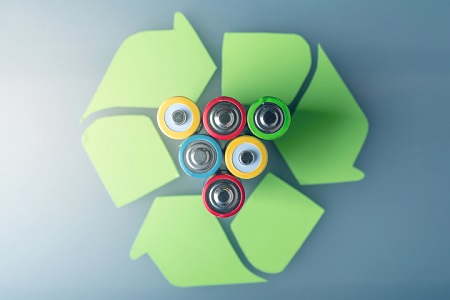
The recycling of several products has been a trend followed by many industries all over the globe. The use of a battery has increased a lot in almost every device, appliance, and automobile such as cars, computers, invertors, and others. Most of the electronic products run through batteries and there is an increase in e-waste, which is becoming a huge problem worldwide. So, companies are recycling batteries to reduce the e-waste generated due to an increase in the use of a battery. Several companies have adopted certain methods to recycle batteries. Many companies are guiding other companies on how they can efficiently recycle batteries without any side effects. Moreover, they are guiding people on how they can dispose batteries after they are of no use. In the U.S., many companies have entered this industry and there is huge scope in the market. There is a huge capability in this market to grow more than before. According to the report published by Allied Market Research, the global battery recycling market is expected to reach $18.3 billion by 2026. There has been a trend of recycling batteries in the market.
Riding on the trend, few market leaders have planned to recycle their batteries. Two European companies recently announced that they are going to recycle battery materials and aluminum from electric vehicles (EVs) in Norway. Northvolt, a Swedish company, and Norsk Hydro, a Norwegian company, have plans to start their functioning in the next year. The recycling will be able to cut the ecological footprints of EVs. The process will be highly automated to crush and sort lithium-ion batteries. It will have the capacity to process more than 8,000 tonnes of batteries in a year.
Companies all over the globe are trying to promote battery recycling. California Recycling Center is trying to promote safe recycling methods of batteries during the Covid-19 pandemic. The company is connecting to several companies to explain how to prevent fires that are caused due to the lithium-ion batteries. This movement, started by the company, is helping several companies in the U.S. The center also helps companies to recycle in a cost-effective and more sustainable way than before. They are also informing users to dispose battery safely if it is of no use. This will prevent any harm to the environment.
There are some recycling techniques that are used by many companies. One of the innovative processes is the hydrometallurgical recycling process. This method involves a chemical precipitation method that allows materials to recover and deliver the product to battery manufacturers for reuse in the production of new batteries. The silver oxide batteries are recycled to recover the mercury from the batteries. The silver oxide batteries are mostly used in toys, watches, and medical pieces of equipment. The lead-acid batteries are recycled by grinding them first. After that, the acid is neutralized and the polymers are separated from the lead. The material that is recovered after the process is then used in preparing new batteries and other types of equipment. The lead-acid batteries are mostly used in golf car batteries, UPS batteries, car batteries, motorcycle batteries, and other commercial batteries.
Although the battery recycling has been a trend all over the globe, certain nations allow only specific kind of battery recycling. Most countries allow recycling of batteries such as AA, AAA, AAAA, 4.5 Volt, A23, CR2032, 9 Volt, and LR44. In United Kingdom and Ireland, several sizes of buttons and coin cells are recycled. In the upcoming years, this market will expand more than before in all the countries around the world.

Koyel Ghosh
Author’s Bio- Koyel Ghosh is a blogger with a strong passion and enjoys writing in miscellaneous domains, as she believes it lets her explore a wide variety of niches. She has an innate interest in creativity and enjoys experimenting with different writing styles. A writer who never stops imagining, she has been serving the corporate industry for the last five years.
Avenue: Entire Library membership of Allied Market Research Reports at your disposal
- Avenue is an innovative subscription-based online report database.
- Avail an online access to the entire library of syndicated reports on more than 2,000 niche industries and company profiles on more than 12,000 firms across 11 domains.
- A cost-effective model tailored for entrepreneurs, investors, and students & researchers at universities.
- Request customizations, suggest new reports, and avail analyst support as per your requirements.
- Get an access to the library of reports at any time from any device and anywhere.
Related Post

Share on Social Media


-
How are Submarine Cables Transforming Global Connectivity with Enhanced User Experience?
-
Endoscopy Procedures: Transformations in Techniques and Applications
-
AI-Powered Video Analytics: How the Product Actually Works for enterprises
-
Painting Robots: Transforming Precision Coating and Creative Applications
-
Innovations in Pharmacovigilance Systems Advancing Patient Safety
-
Understanding Edge Security: Keeping Data Safe Near the Source
-
Exploring the Use and Advancements of 3D Laser Scanners in Professional Applications
-
Reinforcing Industrial Controls with Smarter Tools and Training