Exploring the Use and Advancements of 3D Laser Scanners in Professional Applications
13 Aug
2025
Highlights:
- Introduction
- Accurate & Fast Data Capture
- Wide Industry Use
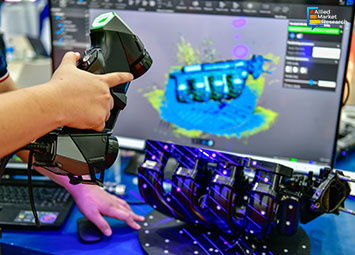
In recent years, the role of 3D laser scanners has grown significantly across many professional settings. These devices, once confined to highly specialized sectors, are now finding use in areas ranging from law enforcement and construction to agriculture and infrastructure maintenance. Their ability to capture highly detailed, three-dimensional information with speed and precision has transformed how professionals analyze, document, and interact with physical spaces.
Precision Mapping and Crime Scene DocumentationOne of the notable areas where 3D laser scanners are seeing more practical use is in police work. A good example comes from Gujarat, India, where the Ahmedabad police department has integrated 3D laser scanners into their standard procedures. As reported by the Times of India, these scanners are now part of a newly updated police manual. Their purpose is to help in documenting crime scenes accurately, especially in cases involving complicated traffic accidents, riots, or other major incidents.
With these tools, officers can digitally reconstruct a scene in three dimensions, ensuring that nothing is missed or tampered with. This offers a more reliable and neutral representation of the site, helping both investigations and court proceedings. The scanners capture the entire environment, including object dimensions and relative positions, which can later be reviewed by forensic experts or legal teams. Instead of relying solely on photographs or written reports, law enforcement can now use detailed 3D images to explain incidents more clearly. This change is especially useful in cases where every detail counts and where human memory can falter or differ.
Use in Agriculture and Automation3D laser scanners are also playing a key role in modern agriculture, especially in tasks related to automated harvesting. A team of researchers recently introduced a new type of scanner designed to help robotic harvesters detect fruits on trees and branches more precisely. As covered in Mirage News, the system is engineered to distinguish between leaves, fruits, and branches with improved accuracy.
This development is especially useful in farms where automation is being introduced to save time and reduce labor dependency. The scanners work by collecting data about the shape, size, and location of different parts of the plant. With this information, harvesting machines can determine exactly where and how to pick fruits without damaging them or the surrounding foliage. It also helps in deciding which fruits are ready for harvest, making the process both efficient and selective. This technology is not only helping to modernize farming but also opening new possibilities for indoor farming and greenhouse operations. According to Allied Market Research, the 3D laser scanners industry accounted for $3.4 billion in 2024 and is expected to reach $15.1 billion by 2034, citing a CAGR of 16.5% during 2025-2034.
Engineering, Construction, and Infrastructure MaintenanceThe engineering and construction industries have also seen substantial benefits from the adoption of 3D laser scanners. These devices are widely used to conduct site surveys, plan renovations, monitor construction progress, and inspect intricate structures. One of the key advantages is that they allow engineers to capture the exact dimensions of a building or site, creating highly detailed 3D models that can be analyzed back at the office.
This approach is especially valuable when working with historical structures or when there’s limited access to the site. Instead of relying on traditional manual measurements, scanners offer more consistency and completeness. They reduce the chances of missing data and can help identify structural issues early by comparing scans over time. This means that maintenance plans can be better managed and safety risks can be reduced.
Moreover, these scanners are also used in tunnel inspections, bridge monitoring, and even in railway system checks. The technology provides a fast and safe way to analyze parts of a structure that might be too dangerous or time-consuming to reach manually. In large infrastructure projects, this level of detail can be crucial for project timelines and safety assessments.
Making Training and Awareness BetterEven though these devices are becoming more common, many professionals who are new to them still don’t fully understand how they work. Users often don’t know all the features or how to read the data they provide. In areas like policing, construction, and agriculture, this lack of awareness slows down the use of these otherwise valuable tools.
Training programs are becoming more important to ensure that teams know how to set up, operate, and analyze the scans correctly. There is also a growing effort to standardize how the data from 3D scanners is stored and shared. Since these scanners collect large amounts of information, ensuring the security and accessibility of that data is a growing concern for organizations working in sensitive environments.
Summing up3D laser scanners are not just high-tech gadgets; they are becoming essential tools for professionals who need accurate, detailed, and fast spatial data. From police officers documenting complex crime scenes to farmers automating harvests, the value of this technology is being recognized in very practical ways. Its development is helping to make everyday tasks more efficient, safe, and reliable.
Contact our specialists for a detailed insight into the latest trends transforming the 3D laser scanners industry.
✍ **𝑨𝒓𝒕𝒊𝒄𝒍𝒆 𝒘𝒓𝒊𝒕𝒆𝒓: Koyel Ghosh

Koyel Ghosh
Author’s Bio- Koyel Ghosh is a blogger with a strong passion and enjoys writing in miscellaneous domains, as she believes it lets her explore a wide variety of niches. She has an innate interest in creativity and enjoys experimenting with different writing styles. A writer who never stops imagining, she has been serving the corporate industry for the last five years.
Avenue: Entire Library membership of Allied Market Research Reports at your disposal
- Avenue is an innovative subscription-based online report database.
- Avail an online access to the entire library of syndicated reports on more than 2,000 niche industries and company profiles on more than 12,000 firms across 11 domains.
- A cost-effective model tailored for entrepreneurs, investors, and students & researchers at universities.
- Request customizations, suggest new reports, and avail analyst support as per your requirements.
- Get an access to the library of reports at any time from any device and anywhere.
Related Post

Share on Social Media


-
How are Submarine Cables Transforming Global Connectivity with Enhanced User Experience?
-
Endoscopy Procedures: Transformations in Techniques and Applications
-
AI-Powered Video Analytics: How the Product Actually Works for enterprises
-
Painting Robots: Transforming Precision Coating and Creative Applications
-
Innovations in Pharmacovigilance Systems Advancing Patient Safety
-
Understanding Edge Security: Keeping Data Safe Near the Source
-
Exploring the Use and Advancements of 3D Laser Scanners in Professional Applications
-
Reinforcing Industrial Controls with Smarter Tools and Training