Painting Robots: Transforming Precision Coating and Creative Applications
19 Aug
2025
Highlights:
- Introduction
- AI-powered painting expands into sports, construction, and art
- Smart robots enable precision coating and art authentication
Painting robots have moved far beyond the image of large machines in automotive plants spraying car bodies. Today, they are entering different places like sports fields, construction sites, art studios, and even military-backed research labs. The main idea is to use machines and software together to paint or coat surfaces efficiently. But advances in artificial intelligence, mobile robotics, and adaptive control systems have given these machines capabilities that would have been unthinkable a decade ago.
Expanding Roles Beyond Traditional IndustriesAutomotive manufacturing was once the main arena for painting robots, with enclosed paint shops relying on robotic arms to deliver consistent coatings while reducing material waste. Now, their scope has expanded into fields such as sports turf marking, building interiors, and creative arts. One example is “Sergei,” a tablet-controlled robot used in North Carolina to paint lines and logos on sports fields. Instead of manually measuring and spraying, field managers can input designs into a tablet and let Sergei handle the entire layout, saving time and ensuring perfect alignment.
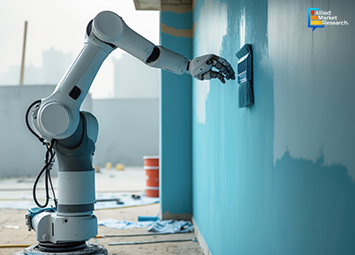
In the construction sector, robots like “The Walt” can autonomously paint interior walls. Fitted with sensors and navigation systems, these robots map out a room, position themselves for even coverage, and adjust spray patterns according to surface textures. Such tools are being used in commercial building projects where speed and uniformity are critical, and where human painters face repetitive strain from long shifts.
Integrating Artificial Intelligence into Paint ShopsWhile mechanical precision is important, painting robots are increasingly being powered by AI for smarter decision-making. In industrial paint shops, AI-driven robots can analyze incoming workpieces, detect variations in shape or size, and adjust their spray path in real time. This reduces defects and minimizes the need for rework. Advanced systems also monitor paint viscosity, nozzle pressure, and air temperature to maintain consistent quality across production runs.
AI isn’t just about efficiency; it is also enabling predictive maintenance. By analyzing sensor data, robots can detect early signs of wear in spray nozzles or actuators and alert technicians before performance drops. This not only reduces downtime but also extends the lifespan of equipment. According to Allied Market Research, the painting robots industry grew from $1.61 billion in 2016 to about $3.20 billion in 2023, recording a CAGR of 10.4% between 2017 and 2023.
Bridging Technology with Art and AuthenticityPerhaps one of the most surprising developments is the role of painting robots in the art world. Recent work funded in part by the U.S. military has focused on using AI-equipped robots to authenticate artwork. These systems can mimic an artist’s brushstrokes with such precision that they can help experts determine if a painting is genuine or forged. The combination of robotics and machine learning allows for analysis at a microscopic level, capturing details that human eyes might miss.
The same technologies used for verification are also being adapted for creative production. Robotic arms equipped with fine paint applicators are producing original pieces in collaboration with human artists. This intersection of technology and creativity is blurring the line between industrial automation and cultural expression.
Winding upPainting robots are no longer limited to controlled factory environments. They are marking sports fields with perfect accuracy, painting building interiors without ladders or drop cloths, enhancing quality control in industrial lines, and even contributing to the preservation and creation of fine art. Machines are now more mobile, smarter, and better at adapting to different tasks. For businesses, the value lies in efficiency, precision, and consistency, whether the goal is coating thousands of car panels or reproducing a historic mural with millimeter accuracy.
Contact our specialists for detailed insights on the latest trends transforming the painting robots industry.
✍ **𝑨𝒓𝒕𝒊𝒄𝒍𝒆 𝒘𝒓𝒊𝒕𝒆𝒓: Koyel Ghosh

Koyel Ghosh
Author’s Bio- Koyel Ghosh is a blogger with a strong passion and enjoys writing in miscellaneous domains, as she believes it lets her explore a wide variety of niches. She has an innate interest in creativity and enjoys experimenting with different writing styles. A writer who never stops imagining, she has been serving the corporate industry for the last five years.
Avenue: Entire Library membership of Allied Market Research Reports at your disposal
- Avenue is an innovative subscription-based online report database.
- Avail an online access to the entire library of syndicated reports on more than 2,000 niche industries and company profiles on more than 12,000 firms across 11 domains.
- A cost-effective model tailored for entrepreneurs, investors, and students & researchers at universities.
- Request customizations, suggest new reports, and avail analyst support as per your requirements.
- Get an access to the library of reports at any time from any device and anywhere.
Related Post

Share on Social Media


-
How are Submarine Cables Transforming Global Connectivity with Enhanced User Experience?
-
Endoscopy Procedures: Transformations in Techniques and Applications
-
AI-Powered Video Analytics: How the Product Actually Works for enterprises
-
Painting Robots: Transforming Precision Coating and Creative Applications
-
Innovations in Pharmacovigilance Systems Advancing Patient Safety
-
Understanding Edge Security: Keeping Data Safe Near the Source
-
Exploring the Use and Advancements of 3D Laser Scanners in Professional Applications
-
Reinforcing Industrial Controls with Smarter Tools and Training