Solar Vehicles to pave an eco-friendly way of transportation
9 Jul
2020
New inventions and technological advancements powered by solar energy have come a long way to wow the world. With its eternal and most sustainable source of energy, solar has powered innumerable elements, offering a convenient and eco-friendly way to the world. And, among those many elements, the solar vehicle is one such innovation.
Though solar vehicles are still in its infancy, however, it is slowly rising to become a potential alternative for green-minded consumers. Environmental issues regarding emissions has become a huge issue. On the other hand, the fuel options are getting limited as well. With a number of such problems, the world would have to adopt other efficient solutions. Owing to these factors, the automakers are investing for alternate fuel including solar. Various automakers have come up with their innovations earlier, and are still working to provide more efficient and appropriate automobiles.
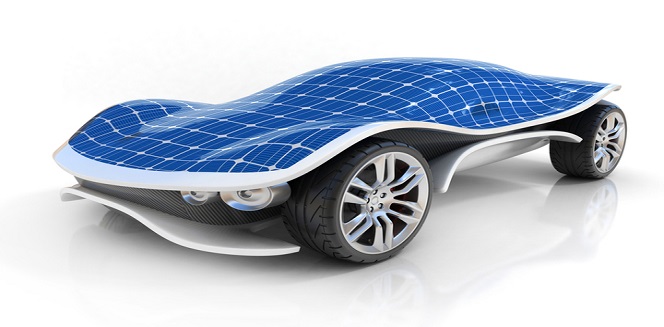
Solar vehicles are basically electric vehicles that are powered by solar energy. The photovoltaic cells installed in the solar panels made of silicon help the panels to convert the solar energy into electric energy. This energy gets stored in the battery of the vehicle. Solar vehicles offer a number of advantages, which makes them potentially attractive and alternative way of transportation for people. Following are some of the benefits of solar vehicle-
Emission-free and quiet-
Solar-powered cars have electric motors, therefore no fuel gets burned to produce emissions. This majorly attracts the green-minded customers offering them an environmental friendly way of transportation. The government regulations to limit emissions as well as propel the demand for the solar vehicle. On the other hand, these cars are quieter as compared to conventional fuel-based vehicles, which decreases noise pollution as well.
No fuel costs and low maintenance-
Solar vehicles derive their power from the sun. And, a number of considerable economic inducements are available to advance, produce, and operate solar cars. Also, their lack of dependency on external fuel sources including diesel and petrol, makes them free from fuel costs. The efficient solar panels can produce and store more horsepower for the vehicle.
Driving Comfort-
Electric motors designed to power solar-cars have smaller engines compared to the equivalent gas engine, which operates without noise and vibrations. Also, the use of aluminum and lightweight components makes solar cars run faster and smoothly, compared to conventional vehicles. These factors enhance driving comfort.
Owing to the advantages, solar vehicles have been widely adopted amongst the people. Also, the researchers and developers are working on developing affordable and reliable, solar-powered vehicles. Moreover, the regulations to limit the emission vehicles would lead to augment the demand in the coming years. According to the report published by Allied Market Research, the solar vehicle market is expected to reach $4.08 billion by 2030. The rising trend of self-charging vehicles, and surge in increased income group among consumers are some of the factors that would lead the market to grow exponentially.

Koyel Ghosh
Author’s Bio- Koyel Ghosh is a blogger with a strong passion and enjoys writing in miscellaneous domains, as she believes it lets her explore a wide variety of niches. She has an innate interest in creativity and enjoys experimenting with different writing styles. A writer who never stops imagining, she has been serving the corporate industry for the last five years.
The 48V system has Geared up Advancements in Automotive, New Launches to Accelerate the Prospects
Avenue: Entire Library membership of Allied Market Research Reports at your disposal
- Avenue is an innovative subscription-based online report database.
- Avail an online access to the entire library of syndicated reports on more than 2,000 niche industries and company profiles on more than 12,000 firms across 11 domains.
- A cost-effective model tailored for entrepreneurs, investors, and students & researchers at universities.
- Request customizations, suggest new reports, and avail analyst support as per your requirements.
- Get an access to the library of reports at any time from any device and anywhere.
Related Post

Share on Social Media


-
How are Submarine Cables Transforming Global Connectivity with Enhanced User Experience?
-
Endoscopy Procedures: Transformations in Techniques and Applications
-
AI-Powered Video Analytics: How the Product Actually Works for enterprises
-
Painting Robots: Transforming Precision Coating and Creative Applications
-
Innovations in Pharmacovigilance Systems Advancing Patient Safety
-
Understanding Edge Security: Keeping Data Safe Near the Source
-
Exploring the Use and Advancements of 3D Laser Scanners in Professional Applications
-
Reinforcing Industrial Controls with Smarter Tools and Training