Automotive Bearings Play an Important Role in Ensuring Smooth and Hassle-free Ride
8 Mar
2021
Car buyers often tend to estimate vehicle quality by how exactly a movement feels inside the car. Suave motion with proper extent of resistance implies good quality, while a mechanism that gives way to loose friction is considered as poor quality. And, automotive manufacturers trying hard to establish a quality reputation should definitely emphasize on the main component of every motion structure, i.e., the bearing.
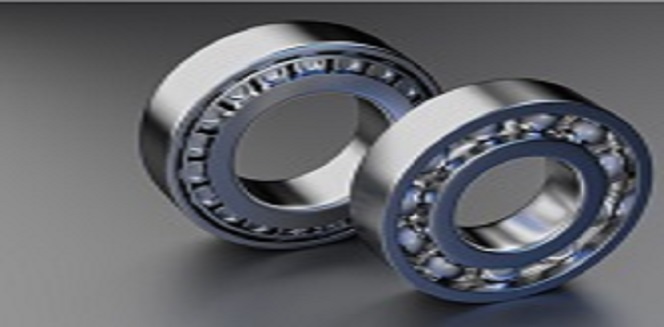
Bearing can be defined as a machine element that coerces relative motion to only preferred motion and cuts unwanted friction between the moving parts. As the vital component in vehicles, automotive bearings not only ensure smooth running of the vehicle, but also make sure the occupants enjoy a hassle-free ride in every possible way. Steering system bearings, engine bearings, air conditioner bearings, transmission system bearings etc. are different bearings commonly used in the automotive sector.
Most bearings are convened into spherical races that enable only circular motion. These are then lumped together onto a sluice and mounted in a capsule. Good control over manufacturing ascertains that the rollers are exactly of the same width and surface finish, ensuing low-friction, smooth rotations.
Bearings are also used in rectilinear systems, probably in seat trails. These are banked on to dole out suave motion while holding out high loads simultaneously. The balls may be concocted loose into carved rails or fitted into retainer fabrications.
Automobiles are reliant on bearings for smooth, low-friction movements; and bearings are highly precise mechanical devices. By conveying the right texture and feel, a good quality bearing provides a vehicle owner with the notion that they possess a first-rate vehicle. Going cheap on the bearings is certainly not a good choice from the owner’s end, as it leads to several difficulties down the line.
According to Allied Market Research, the global automotive bearings market is expected to exhibit a significant CAGR from 2020 to 2027. In the past few decades, there’s been a steep rise in the production of automobiles. Also, several drives have been made to minimize vehicle weight. These factors have fueled the market in more than one way. On the other hand, developments in vehicle electrification, fluxes in the price of raw materials, and high maintenance cost are expected to impede the market growth to some extent. Nevertheless, advent of high-end sensor bearing units and emergence of exclusive additive manufacturing materials have already mitigated the impeding factors and paved the way for numerous opportunities for the frontrunners in the sector.
Here, it’s worth mentioning that the outbreak of Covid-19 led to shutdown of most of the manufacturing units of automotive bearings across the globe. Also, shortage of raw materials and distorted supply chain aggravated the scenario yet more. Nevertheless, as the lockdown has now loosened off, the market is projected to retrieve its position soon. Also, increase in vehicle sale and growing adoption of exclusive technology-based gears & tools for numerous automotive applications are expected to support the market on a positive note.

Koyel Ghosh
Author’s Bio- Koyel Ghosh is a blogger with a strong passion and enjoys writing in miscellaneous domains, as she believes it lets her explore a wide variety of niches. She has an innate interest in creativity and enjoys experimenting with different writing styles. A writer who never stops imagining, she has been serving the corporate industry for the last five years.
Avenue: Entire Library membership of Allied Market Research Reports at your disposal
- Avenue is an innovative subscription-based online report database.
- Avail an online access to the entire library of syndicated reports on more than 2,000 niche industries and company profiles on more than 12,000 firms across 11 domains.
- A cost-effective model tailored for entrepreneurs, investors, and students & researchers at universities.
- Request customizations, suggest new reports, and avail analyst support as per your requirements.
- Get an access to the library of reports at any time from any device and anywhere.
Related Post

Share on Social Media


-
How are Submarine Cables Transforming Global Connectivity with Enhanced User Experience?
-
Endoscopy Procedures: Transformations in Techniques and Applications
-
AI-Powered Video Analytics: How the Product Actually Works for enterprises
-
Painting Robots: Transforming Precision Coating and Creative Applications
-
Innovations in Pharmacovigilance Systems Advancing Patient Safety
-
Understanding Edge Security: Keeping Data Safe Near the Source
-
Exploring the Use and Advancements of 3D Laser Scanners in Professional Applications
-
Reinforcing Industrial Controls with Smarter Tools and Training