Dried Spices Industry: How Are Technological Advancements by Leading Companies Increasing the Revenue Share of the Landscape?
30 May
2024
Highlights:
- Introduction
- Technological advancements in the sector
- The rise of the industry in Asia-Pacific
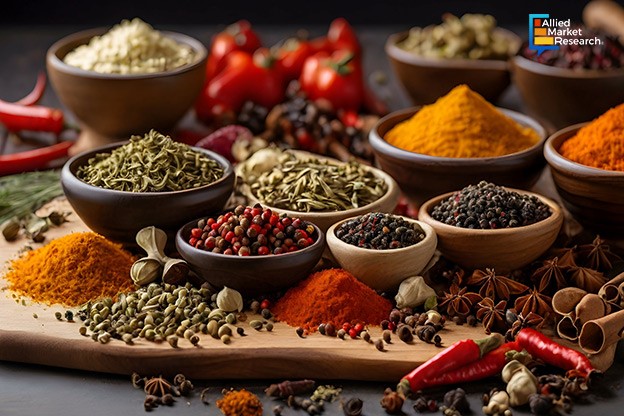
Dried spices have probably been the most important and one of the oldest traded items globally. Since the 2nd century BC, spices have been a major trade item between India and the Roman Empire. In fact, the expansion of an ancient civilization to huge empires in the Indian subcontinent was due to the rich export of a variety of spices to Europe and Africa. Chinese empires built the ancient Silk Road to facilitate this very trade which made them quite prosperous.
This trade continued in medieval times also and according to many experts was the main reason why explorers like Vasco Da Gama, Christopher Columbus, and Bartolomeu Dias were keen on finding a direct sea route to India. In ancient and medieval times, the demand for spices from European countries was primarily for the preservation of meat. However, in modern and contemporary times, this demand has surged primarily due to the increasing demand for exotic and oriental cuisines and dishes in the West.
Increased investments in advancements related to dried spices manufacturing
Dried spices are generally categorized into multiple categories including major spices, seed spices, tree spices, and herbal spices. These spices, before they are sold, undergo different kinds of processes that enhance their texture, improve their taste, and increase their marketability. Hence, many companies are investing in dried spices processing units to gain a competitive advantage over their peers.
For instance, in November 2022, ITC, an Indian conglomerate, announced the launch of its Global Spices Processing Facilities in Andhra Pradesh, India. The chairman of ITC released a statement after the launch saying that this new processing facility would help the company in addressing the international demand while adhering to all the standards related to food safety export norms.
In the past few years, multiple new technologies have been developed by such conglomerates and research institutes which have increased the revenue share of the dried spices industry. Traditionally, spices have always been sun-dried before subjecting them to other processes and procedures; the problem with this technique was that it was heavily dependent on the weather conditions and not considered completely hygienic. Hence, methodologies such as freeze-drying and vacuum drying have recently come up which preserve the nutritional value and cellular structure of these spices.
Along with this, cryogenic grinding technology has also been developed to enhance the quality and flavor of dried species. In conventional grinding techniques, the essential oils from these spices are lost, which also brings down the aroma associated with these techniques. In the new technology, the dried spices are first cooled to sub-zero temperatures so that the essential oils are retained even after grinding.
Asia-Pacific region dominating the dried species industry
The dried spices industry has witnessed some astonishing growth in the Asia-Pacific region owing to the excessive demand for different types of spices from the growing population in this province. The strong culinary culture and the emergence of different cuisines have led to a surge in demand for spices like pepper, cumin, turmeric, ginger, and cinnamon, as a result of which, the landscape is anticipated to flourish in the near future. The industry in Vietnam is expected to have the fastest growth rate in the 2023-2032 period owing to the growing production of dried spices. Moreover, the growing governmental support for spice cultivation activities has also played a big role in the rise of this industry.
Technological advancements in dried spices’ processing techniques are estimated to open new avenues of growth in the region. For example, companies like Krishna Engineering, a major manufacturer in India, in August 2022, announced the launch of its steam sterilization plant for the food and spices sector. The company released a statement saying that the main aim behind this launch was to deliver 100% organic products and cater to the diverse needs of their customers.
To sum it up, the dried spices landscape is expected to receive a major boost in the coming period owing to the massive increase in demand for different kinds of spices across the globe. The development of new kinds of cuisines and dishes and the technological advancements in dried spices manufacturing processes are predicted to create favorable conditions for the industry’s growth in the years to come.
For tips and suggestions on how businesses can increase their revenue share in the industry, feel free to contact us.

Akhilesh Prabhugaonkar
Author's Bio- Akhilesh Prabhugaonkar holds a bachelor’s degree in Electronics Engineering from the reputed Vishwakarma Institute of Technology. He has a special interest in the fields of forensics, world history, international relations and foreign policy, sports, agriculture, astronomy, security, and oceanography. An ardent bibliophile and melophile, Akhilesh loves to write on topics of his interest and various other societal issues. This love for writing made him enter the professional world of content writing and pursue his career in this direction.
Egg Powder and Albumin: Meeting Modern Demands for Convenience, Nutrition, and Versatility
Avenue: Entire Library membership of Allied Market Research Reports at your disposal
- Avenue is an innovative subscription-based online report database.
- Avail an online access to the entire library of syndicated reports on more than 2,000 niche industries and company profiles on more than 12,000 firms across 11 domains.
- A cost-effective model tailored for entrepreneurs, investors, and students & researchers at universities.
- Request customizations, suggest new reports, and avail analyst support as per your requirements.
- Get an access to the library of reports at any time from any device and anywhere.
Related Post

Share on Social Media


-
How are Submarine Cables Transforming Global Connectivity with Enhanced User Experience?
-
Endoscopy Procedures: Transformations in Techniques and Applications
-
AI-Powered Video Analytics: How the Product Actually Works for enterprises
-
Painting Robots: Transforming Precision Coating and Creative Applications
-
Innovations in Pharmacovigilance Systems Advancing Patient Safety
-
Understanding Edge Security: Keeping Data Safe Near the Source
-
Exploring the Use and Advancements of 3D Laser Scanners in Professional Applications
-
Reinforcing Industrial Controls with Smarter Tools and Training