Understanding the Business of Boxcar Scars Treatment Solutions
29 Jul
2025
Highlights:
- Introduction
- Customized Treatment Plans Are Growing
- Technology Is Driving Better Results
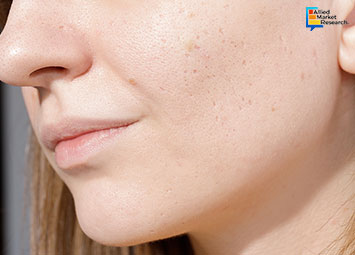
Boxcar scars are a common type of atrophic acne scar that has become a focus in dermatology because they are hard to treat and require different solutions. These scars have a clear, noticeable look with broad, sunken areas and well-defined edges, making them especially challenging to manage. In recent years, a growing number of aesthetic and dermatology clinics have been investing in techniques and technologies to provide better, safer, and more consistent outcomes. This has led to an increasing focus on treatment-based advancements and service customization around boxcar scars.
Treatment Options Gaining Clinical PreferenceSeveral approaches have been used to manage boxcar scars, with fractional laser therapy, microneedling, subcision, dermal fillers, chemical peels, and punch excision being the most prominent. Among these, fractional CO2 laser therapy and microneedling with radiofrequency have found greater acceptance in clinics for their ability to induce collagen remodeling with limited downtime. These treatments aim to resurface the skin, reduce scar depth, and improve overall texture. While outcomes can vary depending on skin type, scar severity, and individual healing response, they are often combined in treatment plans to maximize effectiveness.
What distinguishes the latest service trends is the shift from a one-size-fits-all approach to more patient-specific treatment protocols. Dermatologists and service providers are increasingly relying on in-depth skin assessments, sometimes using AI-driven imaging tools, to design customized treatment sessions. The use of platelet-rich plasma (PRP) alongside microneedling has also grown, based on its regenerative properties and ability to support healing.
In terms of equipment, there has been rising usage of non-ablative laser systems in clinics due to their favorable safety profiles. These systems are designed to deliver energy beneath the skin without damaging the surface, which is particularly beneficial for individuals with darker skin tones who are often prone to post-inflammatory pigmentation. Subcision, a minor surgical technique where the fibrous scar tissue is broken up using a fine needle, is also frequently used in combination with fillers to raise the depressed areas and improve skin contour. According to Allied Market Research, the boxcar scars industry accounted for $1.8 billion in 2024 and is expected to reach $3.1 billion by 2034, citing a CAGR of 5.6% during 2025-2034.
Clinical Advancements and Technology IntegrationTechnology plays a key role in how boxcar scar treatments are delivered. Devices that combine energy-based methods with real-time feedback mechanisms have made their way into clinical practice. These devices help practitioners monitor skin response and adjust settings mid-procedure, improving precision and safety. Moreover, the integration of digital patient records and image tracking software allows clinicians to monitor progress across sessions with better accuracy.
The growing adoption of hybrid laser platforms by several urban clinics earlier this year shows a key development in acne scar treatment. These systems combine ablative and non-ablative wavelengths in one platform, allowing practitioners to target both surface and deeper skin layers in a single session. Some systems now come with built-in cooling mechanisms, minimizing patient discomfort and making the process more efficient.
Reports from various dermatology conferences held in early 2025 have discussed the improved consistency and reduced side effects achieved through combination therapies. Notably, clinics in the U.S. and parts of Europe have reported high retention rates for patients undergoing mixed-modality treatments for boxcar scars. Feedback has also pointed toward better patient education and realistic expectation-setting playing a role in perceived treatment success.
Innovations in the CornerThe dermatology service sector dealing with scar treatment has seen a wave of partnerships and service collaborations recently. In May 2025, a leading aesthetic dermatology group based in California entered into a strategic agreement with a laser equipment manufacturer to standardize treatment protocols across its clinics. The agreement includes training sessions for dermatologists to ensure the correct application of advanced laser systems specifically tuned for scar management.
In India, several mid-size aesthetic clinics have begun offering bundled treatment packages focused on acne scar types, including boxcar scars. These packages often combine three to four sessions of laser resurfacing with topical care and PRP therapy. Although outcomes still depend on patient compliance and aftercare, there is visible effort among providers to present well-structured treatment programs that extend beyond just the procedure.
There’s also been growing discourse on ethical considerations and patient safety in scar revision services. In June 2025, the European Academy of Dermatology and Venereology released new recommendations focusing on informed consent, especially when multiple treatments are proposed in succession. This showcases the increasing regulatory awareness surrounding invasive and semi-invasive scar treatments.
Looking at Service Expansion and Continued ExplorationAlthough boxcar scars are one of several atrophic scar types, they tend to require more layered intervention. This has encouraged more dermatology centers to expand their procedural offerings. Many have started integrating scar treatment into broader acne management programs, addressing active acne and scarring within the same care plan. This combined treatment plan reduces gaps in care and supports a more holistic healing process.
Moreover, the role of post-procedure care is gaining more attention. Clinics now emphasize the importance of skin barrier repair and sun protection after procedures like laser therapy or subcision. They are providing medically-backed skincare products and instructions as part of the recovery package, helping reduce complications and extend the benefits of clinical treatments.
The rise of teledermatology has also brought subtle changes in patient engagement. While scar treatments still require in-clinic procedures, the consultation, progress tracking, and even minor follow-ups are increasingly handled through digital platforms. This allows for better continuity in care, particularly for patients in semi-urban or rural locations who may not have direct access to advanced dermatology services.
The CruxBoxcar scar treatment services are evolving through a mix of clinical innovation, tailored approaches, and enhanced patient-provider engagement. Providers focusing on precision, ethical practice, and comprehensive care packages are likely to shape a more structured and dependable space for treating boxcar scars. With ongoing collaboration between technology developers and dermatology professionals, service solutions in this field are becoming more aligned with both patient needs and professional standards.
Reach out to our team of experts for more updates on the latest trends in the boxcar scars industry.
✍ **𝑨𝒓𝒕𝒊𝒄𝒍𝒆 𝒘𝒓𝒊𝒕𝒆𝒓: Koyel Ghosh

Koyel Ghosh
Author’s Bio- Koyel Ghosh is a blogger with a strong passion and enjoys writing in miscellaneous domains, as she believes it lets her explore a wide variety of niches. She has an innate interest in creativity and enjoys experimenting with different writing styles. A writer who never stops imagining, she has been serving the corporate industry for the last five years.
Avenue: Entire Library membership of Allied Market Research Reports at your disposal
- Avenue is an innovative subscription-based online report database.
- Avail an online access to the entire library of syndicated reports on more than 2,000 niche industries and company profiles on more than 12,000 firms across 11 domains.
- A cost-effective model tailored for entrepreneurs, investors, and students & researchers at universities.
- Request customizations, suggest new reports, and avail analyst support as per your requirements.
- Get an access to the library of reports at any time from any device and anywhere.
Related Post

Share on Social Media


-
How are Submarine Cables Transforming Global Connectivity with Enhanced User Experience?
-
Endoscopy Procedures: Transformations in Techniques and Applications
-
AI-Powered Video Analytics: How the Product Actually Works for enterprises
-
Painting Robots: Transforming Precision Coating and Creative Applications
-
Innovations in Pharmacovigilance Systems Advancing Patient Safety
-
Understanding Edge Security: Keeping Data Safe Near the Source
-
Exploring the Use and Advancements of 3D Laser Scanners in Professional Applications
-
Reinforcing Industrial Controls with Smarter Tools and Training