Innovative uses of carbon nanotubes to lead to new discoveries & developments
13 Dec
2021
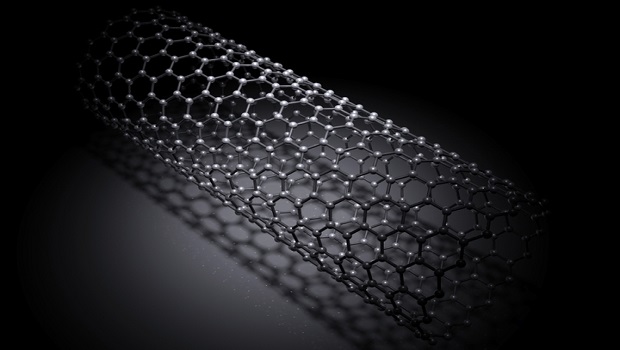
Carbon nanotubes are becoming one of the most useful materials in various sectors such as electronics and healthcare. They can be touted as wonder materials. New discoveries and developments are proofs of that. Researchers have found innovative ways and novel techniques to utilize carbon nanotubes in various applications. One of the innovative applications is in creating graphene nanoribbons. These nanoribbons are useful in the electronics sector. Moreover, researchers produced a shirt from carbon nanotube fibers. It can be used to monitor heart rate in better manner as compared to other equipment such as chest-straps. The demand for carbon nanotubes will increase in the coming years as new applications emerge with research and development activities. According to the report published by Allied Market Research, the carbon nanotubes market is estimated to reach $103.2 billion by 2030. Following are some of the activities taking place across the world.
Researchers have been endeavoring to find innovative applications of carbon nanotubes and their efforts have come to fruition. Researchers have collaborated to devise a method to create graphene nanoribbons (GNRs) on a large scale with the help of carbon nanotubes. Researchers from Shanghai Jiao Tong University, Stanford University, and other institutes in the U.S. and China, developed a technique to produce GNRs with a width below 10-nm. The technique involves utilizations of squashed carbon nanotubes.
GNRs find their application in electronics and optoelectronics sectors. However, the method to produce GNRs on a large scale was not yet discovered. Researchers did not only devise a method to produce GNRs but also obtained atomically smooth edges across the GNRs. These GNRs have high mobility in terms of device and material. Researchers squashed carbon nanotubes together with the help of thermal and high-pressure method for producing edge-closed GNRs that are long and 10-nm wide. Through this approach, nanoribbons of width 1.4-nm can be produced. This discovery would play a significant role in development of electronics and optoelectronics devices.
The innovative uses of carbon nanotubes are not limited to the electronics sector. Researchers have found its application in the smart clothing. Researchers from the Rice University developed a shirt made up of carbon nanotube fibers to monitor heart rate and take electrocardiogram (EKG). They highlighted that these fibers are conductive as metal wires and do not break while body is moving. This shirt is capable of taking readings and collecting data better than the chest-strap. In addition, the shirt made from carbon nanotube fibers provided better EKG as compared to medical electrode monitors.
The carbon nanotube fibers are soft, flexible, and washable. People can sew these fibers with the help of a machine. They can be sewn into a zigzag pattern to ensure the shirt can stretch without breaking. These fibers are attached to the skin of a wearer and act as an electrical contact. In addition, they can be used as electrodes to connect with smartphones through Bluetooth. The combination of biocompatibility, conductivity, and softness shows that carbon nanotube fibers can become vital components in future wearable devices.

Koyel Ghosh
Author’s Bio- Koyel Ghosh is a blogger with a strong passion and enjoys writing in miscellaneous domains, as she believes it lets her explore a wide variety of niches. She has an innate interest in creativity and enjoys experimenting with different writing styles. A writer who never stops imagining, she has been serving the corporate industry for the last five years.
Avenue: Entire Library membership of Allied Market Research Reports at your disposal
- Avenue is an innovative subscription-based online report database.
- Avail an online access to the entire library of syndicated reports on more than 2,000 niche industries and company profiles on more than 12,000 firms across 11 domains.
- A cost-effective model tailored for entrepreneurs, investors, and students & researchers at universities.
- Request customizations, suggest new reports, and avail analyst support as per your requirements.
- Get an access to the library of reports at any time from any device and anywhere.
Related Post

Share on Social Media


-
How are Submarine Cables Transforming Global Connectivity with Enhanced User Experience?
-
Endoscopy Procedures: Transformations in Techniques and Applications
-
AI-Powered Video Analytics: How the Product Actually Works for enterprises
-
Painting Robots: Transforming Precision Coating and Creative Applications
-
Innovations in Pharmacovigilance Systems Advancing Patient Safety
-
Understanding Edge Security: Keeping Data Safe Near the Source
-
Exploring the Use and Advancements of 3D Laser Scanners in Professional Applications
-
Reinforcing Industrial Controls with Smarter Tools and Training