Polymeric Nanoparticles – An Advancement in Nanotechnology is extremely attractive for applications in biology and medicine
22 Nov
2021
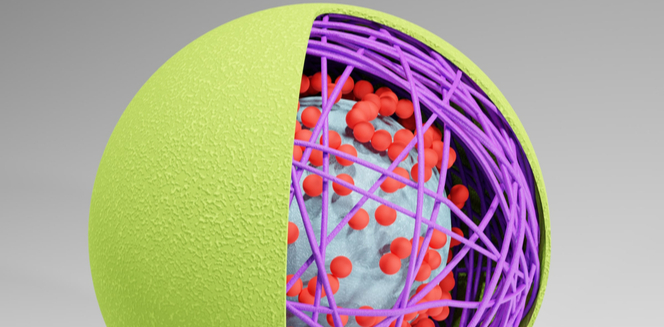
Polymeric nanoparticle is one of the most important fields of medical science that has played an essential role in the development of the nanotechnology to tackle the problems associated with multiple disease treatment and diagnosis. Polymeric nanoparticles (NPs) are tiny particles ranging from one to thousand nm. The term nanoparticle encompasses both nanocapsules and nanispheres, which are differentiated by their morphological structure. Nanoparticles with 100 to 500 nm in size, which can incorporate the drug molecules inside its core, are known as nanocapsules. Nanoparticles with 10–200 nm in size, on the other hand, are known as nanospheres. These drug molecules can be soaked onto its surface or embedded in the matrix of the particles.
Polymeric nanoparticles are organic nanoparticles that can be loaded with active compounds entangled within the polymeric core. Natural, synthetic, and semi-synthetic materials can be used to fabricate polymeric nanoparticles. They have unique characteristics such as high surface area to volume ratio, nanometric size, favorable drug release profiles and targeting features that promote their demand in various treatments.
In case of cancer treatments, nanoparticles can retail several therapeutic agents not only to improve their therapeutic effect on an additive basis, but also to overcome gained resistance to single chemotherapeutic drugs. Multiple therapeutic nanoparticle platforms such as polymer based, lipid based, viral, inorganic, and polymer drug conjugated systems are being tested for targeted cancer treatments. In the past couple of years, more than twenty nanotechnology based therapeutic products have been approved for clinical use in pharmaceutical industry. This way, nanotechnology has proven its role in pharmaceutical sector in order to implement the drug at the targeted site with least side effects.
Polymer based nanoparticles offer significant advantages over other nanoparticles. Polymeric nanoparticles can be fabricated by a wide array of fabrication techniques including spray drying, solvent evaporation, ionic gelation, nanoprecipitation, living- or free radical polymerization, and polymer dispersion technique.
According to a report published by Allied Market Research, the polymeric nanoparticles market size is registered to reach $1.5 billion with a considerable CAGR from 2021 to 2030. Asia-Pacific is currently holding the highest market share, owing to rapidly growing electronics industry in the developing countries like India.
Moreover, the disastrous emergence of the COVID-19 period has increased the research activities for detecting SARS-CoV-2 by nanoparticles to a great extent. Polymeric nanoparticles, metallic nanoparticles, and others have already been used for virus detection. Nanomaterial based sensing strategies are perfect for detection of viruses with better, selectivity, sensitivity, scalability, specificity, authenticity etc. Due to its nano-size properties, it can decrease the high dose related side effects and permeability across the cellular membrane. This beneficial effect of the polymeric nanoparticle can be used for drug delivery to quicken the existing drug for the treatment of COVID-19 infection. With this drift board, the rise in study of polymeric nanoparticles in vaccines is anticipated to provide lucrative opportunity to the market, which in turn, will provide exponential growth to the market in the upcoming years.
Author’s Bio - Suchita Gupta is an explorer, musician and content writer. While pursuing MBA, she found that nothing satisfies her more than writing on miscellaneous domains. She is a writer by day, and a reader by night. Besides, she can be found entertaining her audience on social media platforms. Find her on LinkedIn & Instagram

Koyel Ghosh
Author’s Bio- Koyel Ghosh is a blogger with a strong passion and enjoys writing in miscellaneous domains, as she believes it lets her explore a wide variety of niches. She has an innate interest in creativity and enjoys experimenting with different writing styles. A writer who never stops imagining, she has been serving the corporate industry for the last five years.
Use of Honeycomb Core Materials Has Amplified in the Automotive Industry- Traverse through the Scenario
Avenue: Entire Library membership of Allied Market Research Reports at your disposal
- Avenue is an innovative subscription-based online report database.
- Avail an online access to the entire library of syndicated reports on more than 2,000 niche industries and company profiles on more than 12,000 firms across 11 domains.
- A cost-effective model tailored for entrepreneurs, investors, and students & researchers at universities.
- Request customizations, suggest new reports, and avail analyst support as per your requirements.
- Get an access to the library of reports at any time from any device and anywhere.
Related Post

Share on Social Media


-
How are Submarine Cables Transforming Global Connectivity with Enhanced User Experience?
-
Endoscopy Procedures: Transformations in Techniques and Applications
-
AI-Powered Video Analytics: How the Product Actually Works for enterprises
-
Painting Robots: Transforming Precision Coating and Creative Applications
-
Innovations in Pharmacovigilance Systems Advancing Patient Safety
-
Understanding Edge Security: Keeping Data Safe Near the Source
-
Exploring the Use and Advancements of 3D Laser Scanners in Professional Applications
-
Reinforcing Industrial Controls with Smarter Tools and Training